Tomys Waste: Recycling and Sustainability
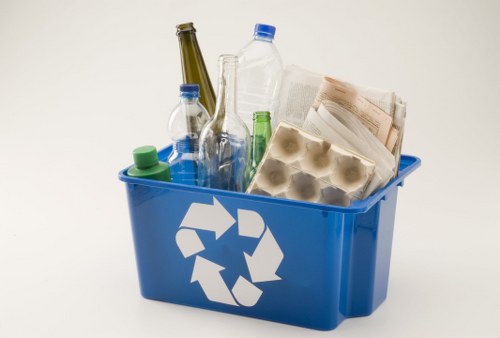 Tomys Waste is committed to building a greener, fairer local economy by turning refuse into resources. Our recycling and sustainability page explains how we track progress, where we operate, and the partnerships that make real reuse possible. We combine practical collection services with strategic investment in low-carbon transport and local transfer stations to reduce landfill and cut emissions across boroughs we serve.
Recycling percentage target
Our measurable goal is to reach a 70% recycling rate across collected waste streams by 2030, with an interim target of 65% by 2028. These percentages refer to the proportion of material diverted from landfill and incineration to recycling, composting or reuse. To hit this target we use route optimisation, improved on-street segregation guidance, and partnerships with local materials recovery facilities (MRFs) and anaerobic digestion plants.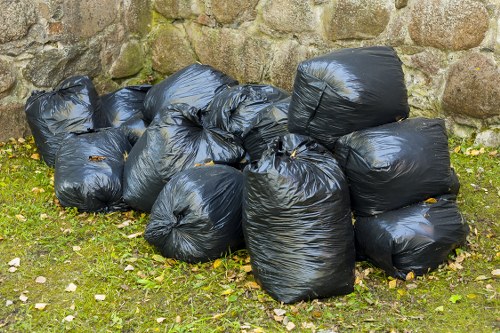
Local sorting and boroughs’ approach
Many of the boroughs we work in already operate an advanced split-collection system — separate bins for paper and card, mixed dry recycling, glass, and food waste. Tomys Waste supports these local separation schemes by offering tailored collection rounds and education campaigns that make it easier for residents and businesses to recycle correctly. We accept common streams such as paper and card, plastics, tins, glass, and organics for composting or AD.Local transfer stations
We operate with a network of convenient transfer stations and hubs to keep logistics efficient and emissions low. Our main transfer points include:- Eastside Transfer Station — primary sorting for dry mixed recyclables and consolidation to regional MRFs.
- Northborough Transfer Hub — specialises in bulky waste, furniture and textiles for reuse and charitable redistribution.
- Riverside Transfer Compound — organics consolidation and preparation for anaerobic digestion and composting.
Each station is chosen for proximity to collection routes and access to sustainable freight corridors, reducing double-handling and keeping vehicle miles to a minimum. We continuously review site performance to ensure they support our recycling percentage target effectively.
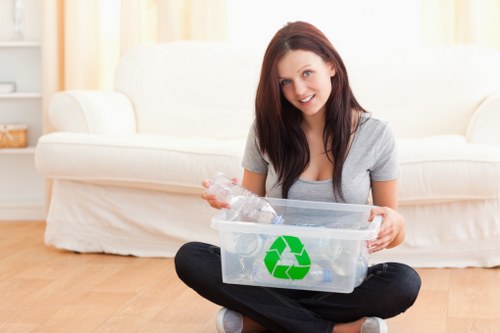 Partnerships with charities are central to how we move from disposal to social value. We work closely with local non-profits that specialise in furniture reuse, textiles repair, and electronic refurbishment. Items that are still in good condition are diverted to community organisations, creating low-cost goods for households in need and preventing unnecessary recycling processing. Where items cannot be reused, materials are dismantled and recycled to recover maximum value.
Low-carbon vans and fleet strategy
Tomys Waste has invested in a growing fleet of low-emission vehicles, including electric vans and Euro 6 hybrid collection units. These vehicles are deployed on dense urban rounds to minimise emissions in residential areas. Our fleet strategy includes rapid-charging infrastructure at strategic depots and continuous monitoring of energy use so that we can expand electric coverage across boroughs.Route optimisation and real-time logistics software reduce unnecessary mileage, improving fuel economy and enabling a faster transition to an all-electric local fleet. In addition to electric vans, we trial hydrogen and plug-in hybrid options where charging infrastructure is not yet viable.
Tomys Waste recycling services integrate closely with public sector waste plans. We feed sorted materials to regional MRFs, organics to anaerobic digestion for biogas generation, and glass to specialist cullet processors. Construction and demolition debris is routed to licensed recycling depots, where aggregates are recovered for reuse in local projects.
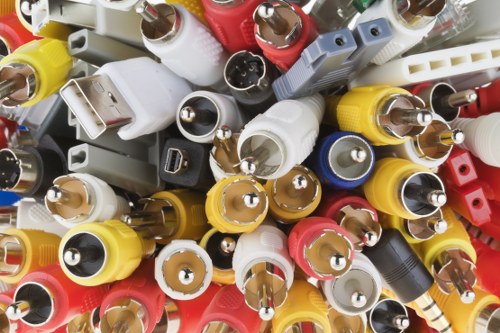
Delivering sustainable outcomes also means supporting behavioural change. We run educational outreach in schools and local community centres to encourage correct separation — paper and card in the blue sack, food into the brown bin, and small electricals to WEEE points. Simple actions at source help us achieve our recycling percentage target and reduce contamination rates at sorting facilities.
Our circular economy approach
We measure progress with transparent reporting on tonnages diverted, vehicle emissions saved, and social value created through charitable partnerships. Zero-to-landfill remains an aspirational goal for our operational hubs: by increasing reuse flows and improving MRF recovery rates we steadily lower the fraction of residual waste that requires disposal.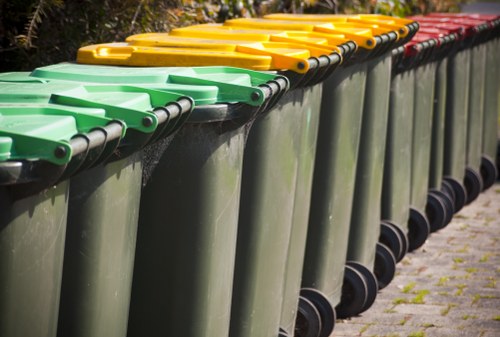 In summary, Tomys Waste is more than a collection provider — we are a partner in local sustainability. Through ambitious recycling percentage targets, a network of local transfer stations, strategic charity partnerships for reuse, and a transition to low-carbon vans, we aim to reduce waste, cut emissions, and keep resources in productive use. Our commitment is practical, measurable, and rooted in the communities we serve.